29 October 2026
How I passed the FSEM Diploma in Team Care
 Dr Isa WaheedStudySEM Founder10 min read
I sat the FSEM Diploma in Team Care in March 2026. I passed. It was the last of the 3 Faculty diplomas I sat, after the Diploma in MSK Medicine and the Diploma in Exercise Medicine, and it was the easiest of the 3 for me.
It was also the one I enjoyed revising for most. Team care covers a side of medicine that most clinicians never see in clinic, and a lot of what I learned was genuinely new to me.
That needs a caveat, though. I came to it having done event cover since medical school. If you have not worked in team care before, the topics can be surprisingly nuanced, and that is worth knowing before you decide how long to give it.
This piece covers what the exam is, what it tests, how I revised and who it suits. If you have not read my DipMSK article, it covers the general approach to Faculty diploma exams, and most of it applies here.
What is team care?
Team care is the medical care of athletes, whether in an individual or a team sport, and at any level from amateur to professional. The Faculty describes it as care that should be consistent, expert-led and evidence-based, often delivered under pressures you do not meet in standard clinical practice.
It covers a wide scope: assessing and managing injury and illness, preparing athletes to perform, reducing the risk of injury and illness, and educating athletes on topics such as nutrition, anti-doping and concussion. It is one of the 3 broad areas of SEM, alongside MSK medicine and exercise medicine, which I explain in What is sport and exercise medicine?
What the DipTC exam actually is
The Diploma in Team Care (DipTC) is one of 3 diplomas run by the Faculty of Sport and Exercise Medicine UK, and one of the 2 newest. It was first sat in 2024, alongside the Diploma in Exercise Medicine.
It assesses knowledge and clinical application of team care across 6 areas: clinical governance, safe and effective practice, multidisciplinary team work, specific athlete groups, specific health conditions, and the duties of the medical team.
The format matches the other 2 diplomas: 180 single best answer questions in 180 minutes, with a 15-minute comfort break after the first 90. It is delivered online and remotely invigilated, so you sit it from home, and there is a single global sitting in UK time. If you cannot make the date, you wait a year.
At the time of writing it costs £296, the same as the other diplomas. The Faculty allows a maximum of 6 attempts across your career, there is no resit date, and results arrive within 6 weeks.
For the 2027 cycle, applications open on 7th December 2026 and close on 9th March 2027, and the exam is on 20th April 2027. Always check the official FSEM Diploma in Team Care page and the FSEM exams calendar for current dates and fees, because these are reviewed annually.
Pass it and you can apply for Diplomate Membership of the Faculty, which gives you the DFSEM(UK) post-nominals on ratification.
Who can sit the DipTC?
The DipTC has the broadest eligibility of the 3 diplomas. Doctors, physiotherapists, nurse practitioners, other registered allied health professionals and international healthcare professionals can all sit it. The Faculty also lists chiropractors, osteopaths, paramedics, sports therapists and sport rehabilitators, provided team care is part of their role.
That breadth reflects how team care works in real life. The person looking after an injured athlete might be a doctor, a physio or a sports therapist, and the Faculty's stated aim is to set a minimum standard for anyone providing that care.
The Faculty strongly advises that candidates have an active interest in team care and experience of delivering it as part of their job. It is worth taking that advice seriously, for reasons I come to below.
Is the DipTC a pitchside qualification?
No, and this is the most common misunderstanding about it. The Faculty states clearly that the DipTC is an assessment of knowledge and clinical problem-solving, and that it does not act as a pitchside or stand-alone qualification to practise in SEM.
If you want to work pitchside, you still need the practical qualifications for your sport, such as the FA's Advanced Trauma Medical Management in Football (ATMMiF) course for football. The DipTC sits alongside those and does not replace them.
Is the DipTC easier than the DipMSK and DipExMed?
For me, yes. Of the 3 Faculty diplomas, I found the DipTC the most manageable, and nothing on the day surprised me. The paper was a balanced mix across the syllabus, with no single area dominating.
I would be careful about reading too much into that, though. The topics are nuanced, and much of the content sits outside day-to-day clinical work. If you have spent time covering events, working with a team or travelling with athletes, a lot of it will feel familiar. If you have not, you are learning a whole working environment as well as the medicine, and the paper expects you to understand how that environment works.
That makes it quite different from the DipMSK, where most clinicians have at least seen the conditions in clinic, and from the DipExMed, where the challenge was the numbers and the judgement calls.
As with my other diploma articles, everything here describes the shape of the paper rather than its questions, which candidates agree not to disclose.
Why it was the most enjoyable to revise
The DipMSK and DipExMed mostly deepen things you already do in clinic. Unless you work in team medicine, the DipTC covers a side of medicine you rarely meet day to day, and that made it genuinely interesting to revise.
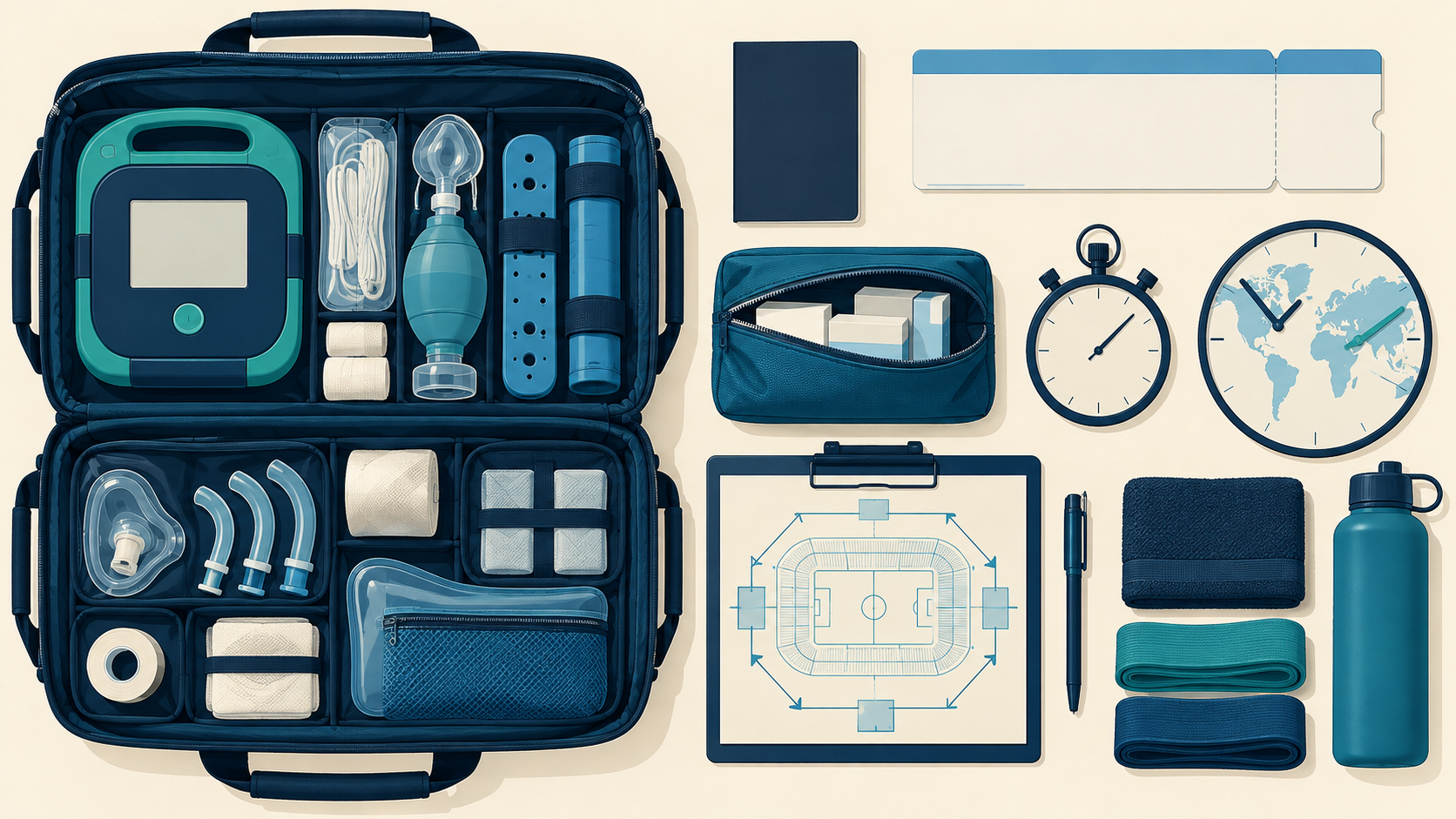
Some of the topics I enjoyed most were:
- Managing jet lag and travel fatigue when a team crosses time zones
- Emergency action planning for training grounds and events
- The medical equipment a team needs, and what goes in the medical bag
- Travelling abroad with medication, including the rules on taking medicines across borders
There is a strong practical streak to all of it. A lot of the syllabus is about planning and preparing before anything goes wrong, which reflects how team care works in practice.
How I revised for the DipTC
I used the same method as for the other 2 diplomas. I started with the official DipTC syllabus, read it end to end, and worked through it item by item using the Faculty's reading list. From those sources I built a set of revision flashcards organised by syllabus topic, and those flashcards became my revision text.
Looking back, StudySEM would have been genuinely useful for this one. As with the other diplomas, there was no single resource that covered the syllabus with questions to test yourself on, so every revision session started with finding the material before I could learn it. That gap is what our DipTC course now fills.
How long should you revise for the DipTC?
It depends mostly on your background. If you already work in team care or event medicine, around 4 to 6 weeks of structured revision should let you cover the syllabus properly. If you do not, I would give it the same 2 months I recommend for the DipExMed, because you are learning the context as well as the content.
Tips for the DipTC
Get some practical exposure if you can. The Faculty strongly advises experience of team care before sitting the exam. Even a handful of events as a first aider or volunteer will make the scenarios far easier to picture. If you have none yet, my article on volunteering as a doctor at the London Marathon is one place to start.
Give the logistics the same attention as the clinical content. Jet lag, travel, medication and emergency planning are part of the syllabus in their own right, so treat them as seriously as the injury and illness topics.
Learn how the medical team works, as well as what it treats. Governance, multidisciplinary working and the duties of the medical team are named areas of the syllabus. They are easy to skim because they feel less clinical, but they are part of what the exam sets out to test.
Do practice questions. Same lesson as the other 2 diplomas: single best answer questions are a skill, and the only way to build it is by answering plenty of them.
Should you do the BASEM revision course?
BASEM runs an independent revision course for the DipTC, usually about 4 weeks before the exam, and the Faculty signposts it while making clear it takes no responsibility for external course content.
I did not do it for this diploma either, and relied on the syllabus and reading list. As with the DipExMed, look at what it covers and what it costs, and decide whether it fills a gap you actually have.
The day itself
The logistics are identical to the other 2 diplomas. Leave 10 to 15 minutes for the pre-exam checks, which include a system check, an identity check and a webcam sweep of your room, so you do not start the paper feeling rushed.
The paper itself held no surprises. It was a balanced mix across the syllabus, and if you have covered every area, you should recognise the territory of each question. Use the 15-minute break properly: stand up, drink water, and do not read anything.
After
Results arrived within the Faculty's 6-week window. Passing the DipTC completed my set of 3 diplomas, which made me eligible to apply for Membership of the Faculty, and I now hold MFSEM.
The diploma is worth having beyond the letters. Team care is the part of SEM most people picture when they think of sports medicine, and the DipTC shows you understand the planning and governance behind it as well as the medicine. For anyone working towards SEM training, it is also solid evidence of commitment to the specialty, which matters a great deal when you build your ST3 portfolio.
Quick answers
Is the FSEM Diploma in Team Care a pitchside qualification? No. The Faculty states that the DipTC assesses knowledge and clinical problem-solving and does not act as a pitchside or stand-alone qualification. You still need the practical qualifications required for your sport.
How hard is the DipTC? In my experience it was the easiest of the 3 FSEM diplomas, with a balanced mix of topics. It can feel much harder if you have never worked in team care, because the topics are nuanced and sit outside everyday clinical practice.
What does the DipTC cover? Team care across 6 areas: clinical governance, safe and effective practice, multidisciplinary team work, specific athlete groups, specific health conditions, and the duties of the medical team. That includes practical topics such as emergency action planning, travel and jet lag, medication and equipment.
Who can sit the DipTC? Doctors, physiotherapists, nurse practitioners, other registered allied health professionals and international healthcare professionals, plus chiropractors, osteopaths, paramedics, sports therapists and sport rehabilitators where team care is part of their role. It has the broadest eligibility of the 3 FSEM diplomas.
What is the DipTC exam format? 180 single best answer questions in 180 minutes, with a 15-minute comfort break after 90 minutes. It is sat online with remote invigilation, on a single date in UK time.
How much does the DipTC cost? £296 at the time of writing, the same as the other FSEM diplomas, subject to the Faculty's annual review.
When is the next DipTC exam? The 2027 sitting is on 20th April 2027. Applications open on 7th December 2026 and close on 9th March 2027. Check the FSEM exams calendar for any changes.
How long should I revise for the DipTC? Around 4 to 6 weeks if you already work in team care or event medicine, and around 2 months if you do not.
Do I need team care experience to sit the DipTC? For most candidates it is strongly advised rather than required, although for some professional groups, such as nurse practitioners, team care experience is part of the eligibility criteria.
Do I need to sit the FSEM diplomas in a particular order? No. Each is independent. I sat the DipMSK first, then the DipExMed, then the DipTC. Passing all 3 makes you eligible to apply for Membership of the Faculty.
If you are sitting the Diploma in Team Care, the StudySEM DipTC course covers the syllabus topic by topic, with concise explanations and practice single best answer questions mapped to every syllabus item, so you can work through it methodically and see exactly what you have covered. It is the resource I wish I had when I was building those flashcards.