26 August 2026
Why I am sitting the FSEM Specialty Exam as a specialist
 Dr Deléne WassermannGuest Contributor4 min read
When people hear that I'm preparing for the FSEM Specialty Examination, they usually make one assumption:
'So you're training to become a sports medicine specialist?'
The answer always surprises them.
'No, I already am one.'
I obtained specialist recognition in Sport and Exercise Medicine (SEM) in South Africa after completing specialist training and a peer-review process during the establishment of the specialty. Since moving to the UK, I've continued to work in SEM, managing musculoskeletal conditions, providing pitch-side medical cover in elite rugby, and performing cardiovascular screening for young athletes through the Cardiac Risk in the Young (CRY) programme. I also completed an MSc in Sports Cardiology because I wanted to deepen my understanding of one of the most fascinating and rapidly evolving areas of our specialty.
So why would someone who is already practising as a specialist decide to sit another specialty examination?
It's a question I've been asked many times over the past year, and the answer has become clearer the longer I've prepared.
Medicine doesn't stop at certification
One of the greatest privileges of medicine is that learning never really ends.
Every healthcare system has its own standards, training pathways and expectations. Although the principles of good clinical care remain universal, the way competence is assessed and recognised differs between countries.
Moving internationally has reminded me that becoming a specialist isn't the end of professional development. If anything, it's the beginning of a different phase, one where curiosity, humility and adaptability become just as important as knowledge itself.
Preparing for the FSEM examination has challenged me to revisit topics I haven't studied formally for years. Exercise physiology, public health, exercise medicine, anti-doping, environmental physiology and behaviour change all require far more than a superficial understanding. They demand that you connect science with clinical decision-making.
That's exactly what good Sport and Exercise Medicine should be.
From clinical experience to exam thinking
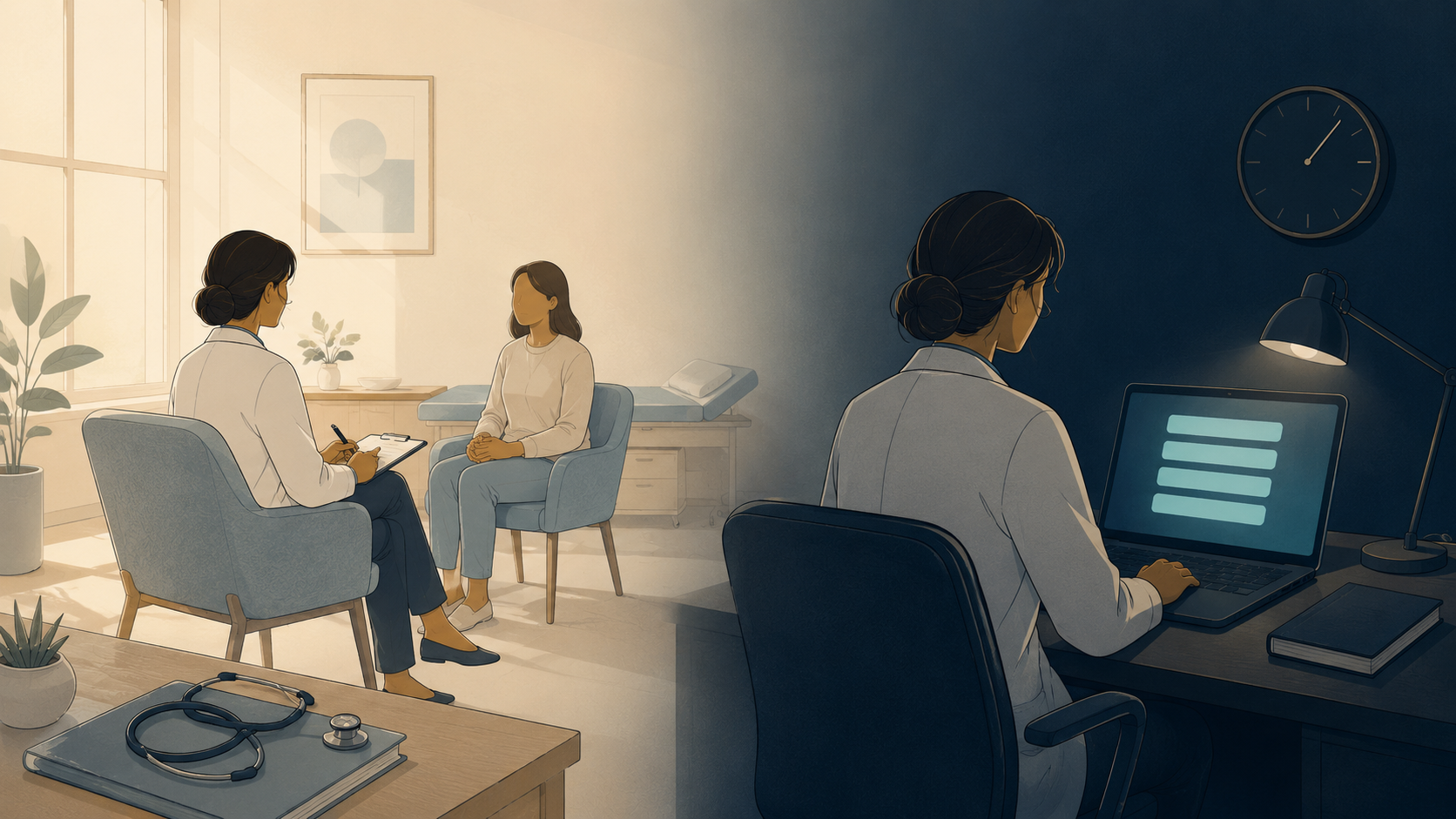
One of the biggest surprises has been the difference between everyday clinical practice and examination preparation.
In clinic, we rely on pattern recognition, experience, patient-centred discussions and shared decision-making. We have time to gather more information, review investigations and discuss management with colleagues when needed.
An examination is different.
It asks you to identify the single best answer from several plausible options. It tests whether you know current guidance, understand the underlying physiology and can apply evidence consistently under time pressure.
Preparing for the exam has reminded me that expertise isn't simply about experience. It's also about keeping pace with evolving evidence and understanding why we make the decisions we do.
Looking at my own practice differently
One unexpected benefit has been how often revision has influenced my clinical work.
Reviewing current evidence has prompted me to rethink exercise prescription in chronic disease, revisit return-to-play decision-making and deepen my knowledge of exercise physiology. It has reinforced that many areas of SEM continue to evolve rapidly.
As clinicians, it's easy to become comfortable with established routines. Studying again forces you to ask, 'Is this still the best evidence?'
That is never a wasted exercise.
The international perspective
International medical graduates often have to prove themselves more than once.
Qualifications that represent years of work in one country are not always recognised in another. At first, that can feel frustrating.
Over time, however, I've come to see another side of the process.
Different systems encourage us to compare approaches, question assumptions, and learn from colleagues with different experiences. Rather than diminishing previous training, they can broaden it.
Sport and Exercise Medicine is an international specialty. Athletes, teams and clinicians increasingly move across borders. Our learning should do the same.
Why I'm still excited
Preparing for another specialist examination while working full-time hasn't always been easy. There are evenings when opening another textbook feels less appealing than anything else, and weekends where balancing study with family life requires careful planning.
But I genuinely enjoy our specialty.
Few areas of medicine allow you to combine physiology, cardiology, musculoskeletal medicine, public health, rehabilitation, emergency care and performance science in the same consultation.
Every time I revise, I'm reminded why I chose Sport and Exercise Medicine in the first place.
A final thought
If you're preparing for the FSEM examination, whether as a trainee, an international doctor or someone returning to formal study after years in practice, remember that sitting an exam is not a measure of your worth as a clinician.
It's simply one step in a much longer professional journey.
For me, preparing for the examination has never been about proving what I already know.
It's about ensuring that I continue to grow, continue to learn and continue to provide the best possible care for the patients and athletes who trust me.
And that's a journey worth taking, no matter how many qualifications you already have.